Familieboten – Integration Engineering, Booking Systems and AI-Assisted Delivery
Robert ·
The Challenge

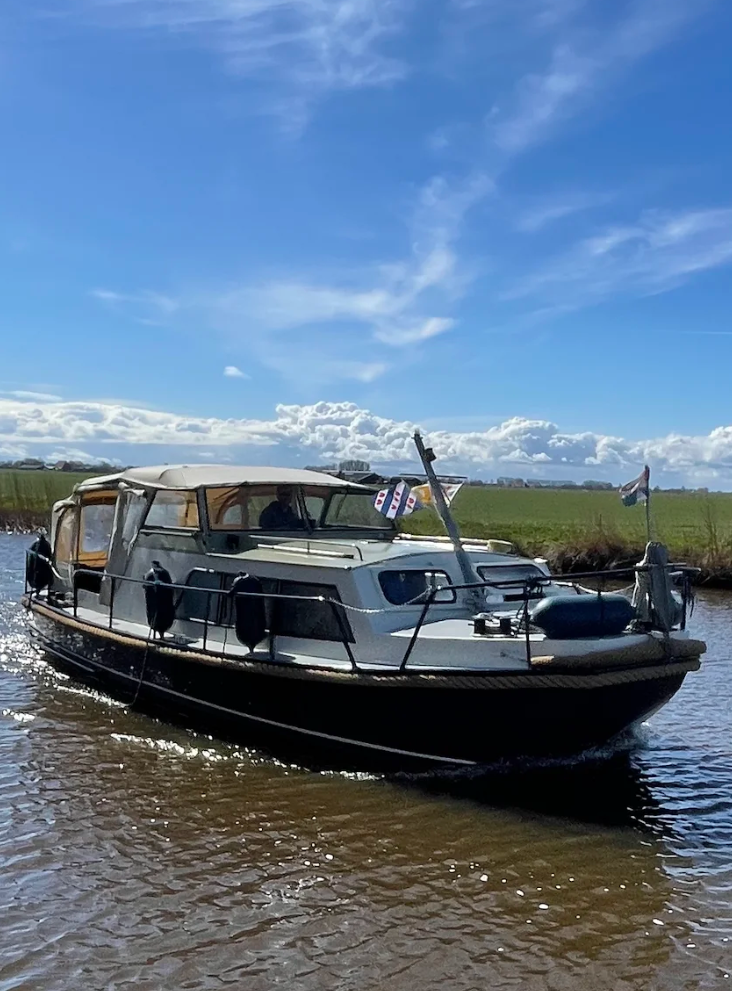
A few weeks ago, a friend of mine approached me and said he had a challenge. And the challenge is this: He had started a boat hiring website. The premise is fairly simple. It’s “AirBnB for boats”. If you want to go on a boating holiday in Fryslân (Province in The Netherlands) you would go to the Familieboten.nl website and find the boat to book. Book it for a period and go on you holiday.
This idea all started with one boat. Taco and Wietske’s own boat. They realised that they won’t be using it every week of the year and they could rent it out. So they did. One boat, one website. It covered some of the cost of owning the boat. Great! Then, a friend turned up and said: “Can my boat also be on your website?”. And you can see where this is going. Word spread and soon Taco and Wietske had a couple of dozen boats on the website generating income for the owners and the website. Not bad.
Another breakthrough came when a yacht marina asked if their boats could be on the Familieboten website. Familieboten saw the opportunity and worked with the marina to get the boats online. There was however one problem. The yacht marina already had a booking system. The backoffice staff would book boats and their website would also take bookinsd. They did not want to change that. Their site had enough momentum. They just wanted to improve their footprint and exposure by being available on Familieboten as well.
Taco had to repsond to make this work. The booking system that underpins Familieboten.nl is able to import iCal files. It was also fortunate that the marina’s system could export iCal files. This meant that periods of bookings could be managed in the background by creating a monitor script that consumed the iCal files and imported them into Bookzo (the Familieboten backend booking system).
So Familieboten now had a working adapter that could consume bookings from another system and display the appropriate booking slots on the familieboten website. This led to one other marina joining in and soon Taco had almost 100 boats on the site. Business was picking up.
At this point Familieboten realised that there wa a USP here. What if Familieboten automates the intake of boats from marina booking systems and takes away the pain for the marina owners of having to re-enter all boats and booking slots on yet another website. Marinas would instantly be able to expand their exposure and get more bookings. The cost to them would be a small commission for Familieboten but they would not have to employ a software engineer or data engineer to create the tooling. Familieboten would take care of it. Instant increase in exposure.
Familieboten was now faced with a challenge. It’s a small company and does not necessarily have the instant operational capital to employ a software engineer either. Taco had already created the iCal monitoring script by using Claude. It helped him to set up a basic, working operational data flow that got him started. But now more marinas were asking for a place at the table and their systems were different. How do we get the data into Bookzo?
At this point, some six weeks ago, I got in contact with Taco via a friend. We talked about the challenge and the opportunity and I decided that I could have a go at building this new adapter for him. This is he story of what was done.
Getting Started
The Familieboten work started out looking relatively straightforward. Synchronise booking systems. Pull availability. Normalise pricing. Push updates into Bookzo. Simple enough.
Except, as is usually the case with integration projects, none of the systems behave in exactly the same way. Some expose APIs. Some expose partial APIs. Some expose iCal feeds. Some expose unreliable iCal feeds. Some require scraping. Some return slightly different semantics for what appears to be identical data.
That’s where things became interesting.
Integration work is mostly edge cases
I think people sometimes imagine integrations as clean API-to-API engineering. In reality, most of the work is dealing with operational edge cases and protecting systems from bad data.
A large amount of time and effort was spent on normalising data structures, preserving pricing semantics, protecting against destructive sync behaviour, UTC handling, duplicate handling, reconciliation logic, sync safety, validation, logging and observability.
It’s not glamorous work. In fact, the reason a lot of the basic plumbing around the SDLC has been put in is because I did most of this work as AI assisted delivery.
And if you don’t put the plumbing in, operational systems become very stressful very quickly. You have to monitor and check the AI generated code.
Each supplier became its own adapter problem
Each marina had to have it’s own integration. I wanted the architecture to be losely coupled from the beginning. I want to treat the ingest separately from the transformations and the load. I know, traditional ETL. But it works and people know it. This is important when other people have to take over. You cannot just let the AI create code and then have it not be understood by others. So I wanted to use known architectural models from the start.
As mentioned already, some marinas used iCal and now we had a new marina that had a full XML dump of all bookable slots available for us. Noice, structured data. This is a good start. This XML was generated by their booking system and it gave us a huge leg-up. But, we still have to map and transform it to fit into the Bookzo system. This was by no means trivial. Bookzo used a different structure altogether. Instead of creating bookings rooted in dates slots, Bookzo based everything on pricing. There would be a price tier (known as a layer) and it would have date periods assigned to it. The XML provided all the data but was structured differently. So the adpater had to adjust for that.
Because I now approached this adapter as a generic ETL flow but with specific XML to Bookzo configuration, it became a lot easier to generelise and reason about.
AI-assisted engineering changed the workflow quite dramatically
This project also became one of my first proper deep dives into AI-assisted software delivery. Not toy examples. Not one-shot prompts. Actual iterative engineering work using ChatGPT, Codex, GitHub workflows, local LLMs, architectural prompting, iterative review cycles, AI-generated scaffolding, AI-assisted documentation and release management.
The interesting part wasn’t really the code generation itself. The biggest change was momentum. Instead of spending long periods context-switching between boilerplate, documentation, scaffolding, syntax and repetitive plumbing, the workflow became much more conversational.
Almost like having a second engineer constantly available for implementation support. And because I am not a software engineer, this is the gap that Codex plugged for me. But, without me pointing out that I wanted certain controls in place, I am not sure that this would have made it into production. I would say that Codex was able to do good work because I told it to set up the CI/CD, code quality testing, test plans (smoke, unit, regression, integration and even UAT procedures). I was also able to setup the security checks with tooling like semgrep. Setting up all the rigour around the project was definitely what made this more sustainable. In previous attempts at writing software, the code often became unmanageable. That has so far been prevented.
Good structure matters more with AI
One thing that became obvious quite quickly is that AI performs dramatically better when the surrounding engineering discipline is good.
The projects that worked well had clear repository structure, explicit architecture, scoped prompts, strong logging, review workflows, clear operational boundaries, incremental delivery. I also made sure that each feature was created on a new branch. Thus not affecting the main product until all testing had passed.
Without that structure things could have become chaotic very quickly. That was probably one of the biggest practical lessons from the project.
The one thing that I have not done yet is to build a digital twin of the environment. I have had to take a leap of faith to implement the new adapter on the live system and see if it worked. And more importantly, didn’t break anything. So before we did, Taco and I discussed the safe route to do this. We made a plan and included some safeguards. Then, we were able to successfully roll out the adapter. Again, with all the best practice, well known release practices and rollback plans.
Observability became essential
At some point, we started putting significantly more effort into structured logging and operational visibility. Instead of manually wondering whether syncs were behaving correctly, we could start seeing how many boats were processed, how many records changed, whether removals looked suspicious, upstream failures, pricing drift, sync timings, whether we had repeat retries.
Which naturally led toward Grafana, Loki and more structured operational monitoring. The adapter logs were put into Loki and we built a Grafana dashboard to show the status of the adapter. At this point I felt that the pipeline and the outcomes were much more transparent adn I felt that I could sleep at night. That was two weeks ago and the adapter has been behaving well.
Final thoughts
As a business architect, I like what the AI was able to assist with. This wasn’t a one-prompt, fire and forget coding agent. It was a controlled AI accelerated deployment of a data flow. It combines skill domains such as:
- operations
- systems integration
- product thinking
- automation
- AI-assisted engineering
- and messy real-world business constraints
It was a real-world deployment that may have taken a team much longer to get done and it wouldn’t be because the code would have taken long to create. Or rather, the code would have taken a substantial amount of time but the process and software development rigour is something that needed quite a lot of attention. Especially because you cannot always see the AI’s decision making or even the outputs from the software that it has created. So to create a sustainable product, the usual checks and balances need to be in place.
So this has been a project with many lessons. We’ll see how the product stands up in real life. So far so good.
I did get left with one question. Could I have implemented this with commodity software? Would ETL tooling have done the trick? Honestly, yes, I think it would have. But when you ask an apple trader which fruit you should buy… This is what happened with Codex. I suggested that I should use commodity software and frameworks to build the pipeline but, for a single adapter implementation it suggested that a bit of code would probably work. In some ways it was right, but after I put in some architectural requiements like micro service architecture, modular design, losely coupled, security from the start and more principles like it, it felt like I am now building a framework that is potentially just as infrastructure heavy. So the next evolution may be to migrate to a stack that is more out of the box and less code.
That will be a story for another day…
Acknowlegements
Many thanks to Familieboten for the opportunity to build this data adapter. I big shout out to Bookzo for being extremely helpful about the use of their API. We all learned a lot together.
I think I will now consider a nice holiday. Perhaps on a boat in Fryslân?
- https://www.familieboten.nl
- https://www.bookzo.nl/